


Window Glass Replacement vs. Full Window Replacement: Which Do You Need?

A cracked pane or fog between the glass does not automatically mean you need a completely new window. In many homes, the glass is only one replaceable part of a larger window system.
If the frame and sash are still solid and working correctly, replacing the glass may be all that is needed. If the frame is rotten, warped, leaking or no longer operating properly, repairing the glass alone will not solve the full problem.
The right answer depends on which part has failed.
The Quick Comparison
What you see | What it may mean | Likely next step |
Fog or haze trapped between the panes | The insulated glass seal has failed | Replace the complete sealed glass unit |
Cracked or broken glass in a solid frame | The glass has failed, but the window may still be serviceable | Replace the glass or insulated glass unit |
Rotten wood, warping or structural damage | The frame or sash has deteriorated | Evaluate the window for complete replacement |
A sash that sticks or will not stay open | The problem extends beyond the glass | Evaluate the window for complete replacement |
Air or water leaking around the window | The frame, flashing, installation or surrounding opening may be involved | Evaluate the complete window and opening |
A planned change in style, size, color or operation | The existing window no longer fits the homeowner's goals | Consider complete window replacement |
This table is a starting point, not a substitute for inspecting the window. Water and air leaks can travel, and the place where you notice the problem is not always where it started.
What Does Window Glass Replacement Include?
Window glass replacement keeps the usable window frame and sash in place. The damaged glass is removed, and a new piece of glass or a custom insulated glass unit is installed in the existing opening.
Most modern double-pane windows contain an insulated glass unit, often shortened to IGU. It is built as one sealed assembly with two panes, a spacer and perimeter seals. It may also include Low-E glass, insulating gas, or grids between the panes.
If one pane breaks or the seal fails, we do not replace only one side of that double-pane assembly. The complete insulated glass unit is measured and manufactured to fit the existing window.
Glass-only replacement is often the practical choice when:
The glass is cracked or broken, but the frame and sash are solid.
Fog or haze is trapped between the panes.
The window opens, closes and locks correctly.
There is no significant rot, warping or structural damage.
The problem is limited to one or a few glass units.
You want to preserve an existing wood window or architectural style that is still in good condition.
Keeping the existing frame usually means less disruption to the surrounding trim, siding and finishes. It also avoids paying to replace window components that are still doing their job.
Replacement glass can often be made with a similar thickness, Low-E option, tint and grid pattern. Exact visual matches are not always available, especially with older windows, discontinued coatings or sun-faded grids. We identify the closest available option and explain any likely difference before the unit is ordered.
When Does the Complete Window Need to Be Replaced?
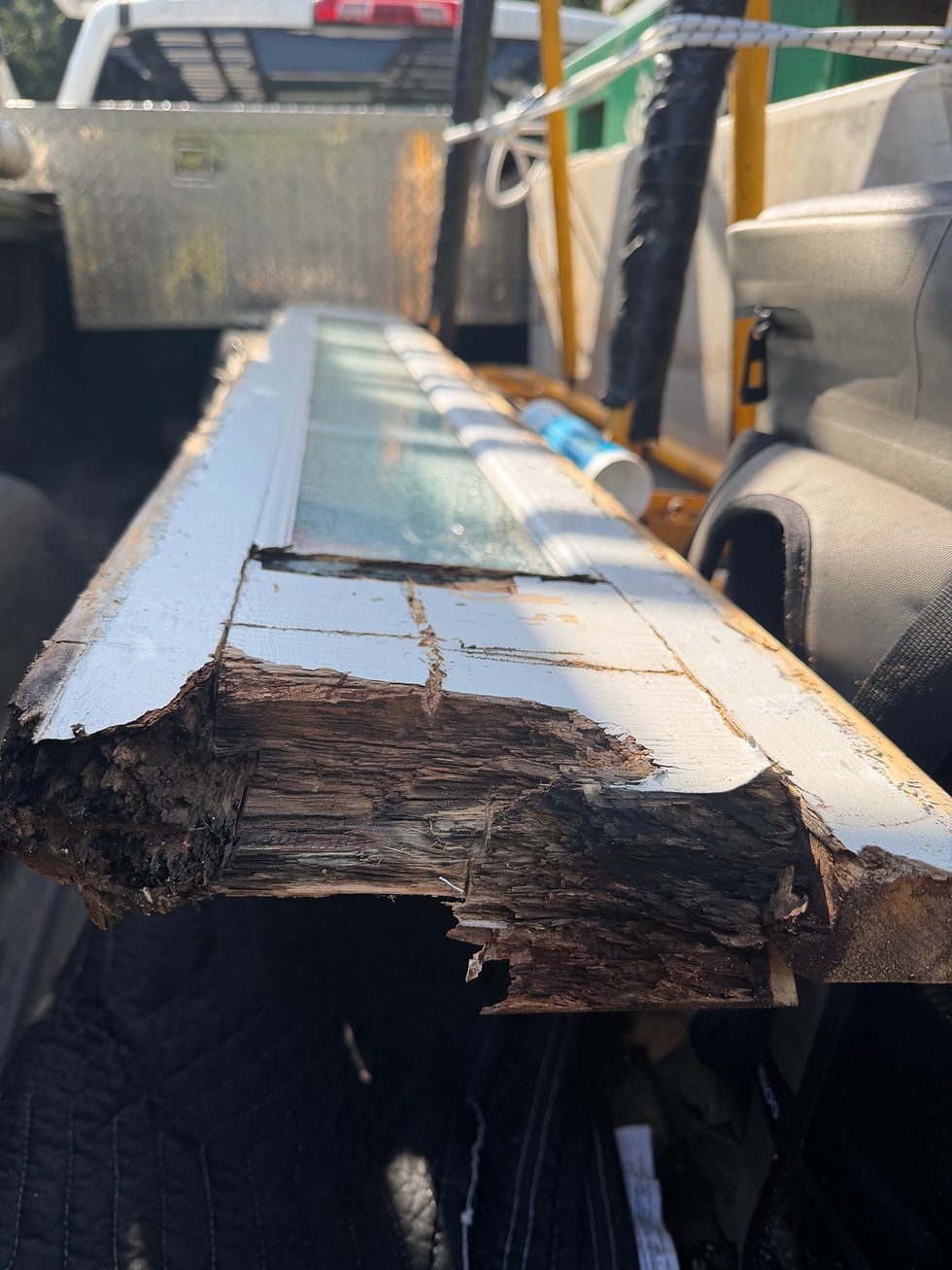
A new glass unit cannot repair a damaged frame. Complete window replacement becomes the stronger option when the problems extend beyond the glass.
Signs that the complete window may need attention include:
Soft, rotten or deteriorated wood around the sash or frame.
A frame that is cracked, twisted or warped.
A sash that no longer fits the opening correctly.
Repeated water intrusion that has damaged the window or surrounding materials.
Serious operating problems that keep the window from opening, closing or locking correctly.
A failed or outdated window system across several openings.
A planned change in window style, size, frame material, color or operation.
Replacing the complete window gives you new glass, sash, frame, weatherstripping and operating components as one system. It may also provide an opportunity to address air or water leakage around the old frame, depending on the installation method and the condition of the opening.
This is where the diagnosis matters. Installing a new glass unit in a rotten sash is money spent on the wrong part. On the other hand, replacing an entire window because one sealed glass unit failed can mean paying for much more than the problem requires.
Complete Window Replacement Is Not Always the Same as Full-Frame Installation
These terms are often mixed together, but they do not mean exactly the same thing.
A complete replacement window is a new manufactured window unit rather than replacement glass installed in the old sash.
That new window can be installed in two common ways:
Insert or pocket replacement: The old sashes and operating parts are removed, and the new window is installed inside a structurally sound existing frame.
Full-frame replacement: The existing window frame is removed down to the rough opening before the new window is installed.
Insert replacement usually preserves more of the existing trim and siding. Full-frame replacement gives the installer access to the opening and is often the better method when the old frame is deteriorated, the opening has water damage or the window size and style are changing.
Southern Glass Solutions evaluates the existing window and opening before recommending an installation method.
Will Replacing Only the Glass Improve Energy Performance?
Replacing a failed insulated glass unit restores that sealed glass assembly with the glass package selected for the new unit. That may include Low-E glass and an insulating gas fill when appropriate.
However, the glass is only part of a window's performance. Drafts can come from gaps around the frame, poor installation or a sash that no longer seals correctly. A glass replacement will not repair those conditions. When the problem extends beyond the glass, we can evaluate the opening for complete window replacement.
If the entire window is being replaced, compare complete products using the NFRC label. It provides ratings such as U-factor, Solar Heat Gain Coefficient, Visible Transmittance and, when listed, Air Leakage. Those ratings apply to the window as a complete system, not just the center of the glass.
No contractor can honestly promise a specific power-bill reduction from replacing one glass unit or one window. The result depends on the old product, the new product, installation quality, window size and orientation, the rest of the home and how the home is heated and cooled.
Which Option Costs Less?
Replacing only the glass usually costs less than replacing the complete window because the usable frame, sash, trim and surrounding materials remain in place. The final price still depends on the size, shape, glass type, Low-E coating, grids, safety-glazing requirements and access to the opening.
Complete window replacement includes more material and labor. Cost can also change based on frame material, window style, installation method and whether interior trim, exterior siding, flashing or finishing work is required.
How Southern Glass Solutions Decides What to Recommend
We start by separating the glass problem from the window problem.
During an evaluation, we look at:
Whether the damage is on the glass surface or trapped between the panes.
The condition of the sash and frame.
Signs of rot, warping, water entry or failed sealant.
The existing IGU thickness, coating, and grid pattern.
The homeowner's goals for appearance, operation and long-term use.
Because Southern Glass Solutions provides both insulated glass replacement and complete window replacement, we can recommend the option that fits the condition of the window instead of treating every problem the same way.
Southern Glass Solutions serves homeowners in Jefferson, Jackson County and surrounding Northeast Georgia communities.

Not Sure Which Part of the Window Failed?
Send us one straight-on photo of the glass and one wider photo showing the complete window and frame. We can usually point you in the right direction and let you know whether an on-site evaluation is needed.
Call or text Southern Glass Solutions at (678) 640-2075.

Comments